
Prefer to watch? The full 20-minute audit is above, or browse our video library.
Most articles about SEO audits give you a checklist. This one gives you the audit itself. We ran the full process we normally charge clients for on Cal.com, the open-source rival to Calendly, in public, and this post walks through every step with the real screenshots, the real data, and the exact checks so you can run the same audit on your own site. Cal.com did not ask for this, and to be transparent, I reached out to their founder before publishing to flag the most serious finding. What follows is not a takedown; it is a working example of what a serious SEO audit looks like in 2026, run on a company that is genuinely trying.
- Cal.com runs almost the entire modern SEO playbook, 712 blog posts and hundreds of programmatic pages, yet gets 14x less traffic than Calendly and 34x less traffic value. Volume was never the problem.
- A keyword model prices Cal.com’s ranking footprint at $265K/month, higher than Calendly’s $140K, while real traffic value runs $35K vs $1.2M. The gap between those numbers is the diagnosis: mirage traffic.
- Their most valuable search is owned by a tiny competitor’s honest listicle, an exact-match domain, and a Reddit thread. Their own self-promotional listicle is organically invisible.
- The audit found 493 commercial keywords at positions 5-25, a live parasite-SEO page on their own domain, and one unclaimed category worth more than everything else combined.
What is an SEO audit, actually?
A real SEO audit answers one question: where is the gap between the traffic you earn and the revenue it produces, and what specifically closes it? It is not a crawl report or a list of missing meta descriptions. The audit below runs six steps: verify what the traffic is made of, dissect the money SERP, test the AI answers, find the striking-distance pages, check what the community layer says about you, and find the shelf nobody has claimed yet. Every step is shown on a real company so you can copy the process.
The patient: a good company with mirage numbers
Cal.com has raised over $30 million, developers genuinely love it, and this is not a lazy marketing team: 712 blog posts, programmatic pages, an affiliate programme, sitemaps in seven languages. The footer architecture is excellent. The enterprise page is excellent. And still, the scoreboard reads like this:
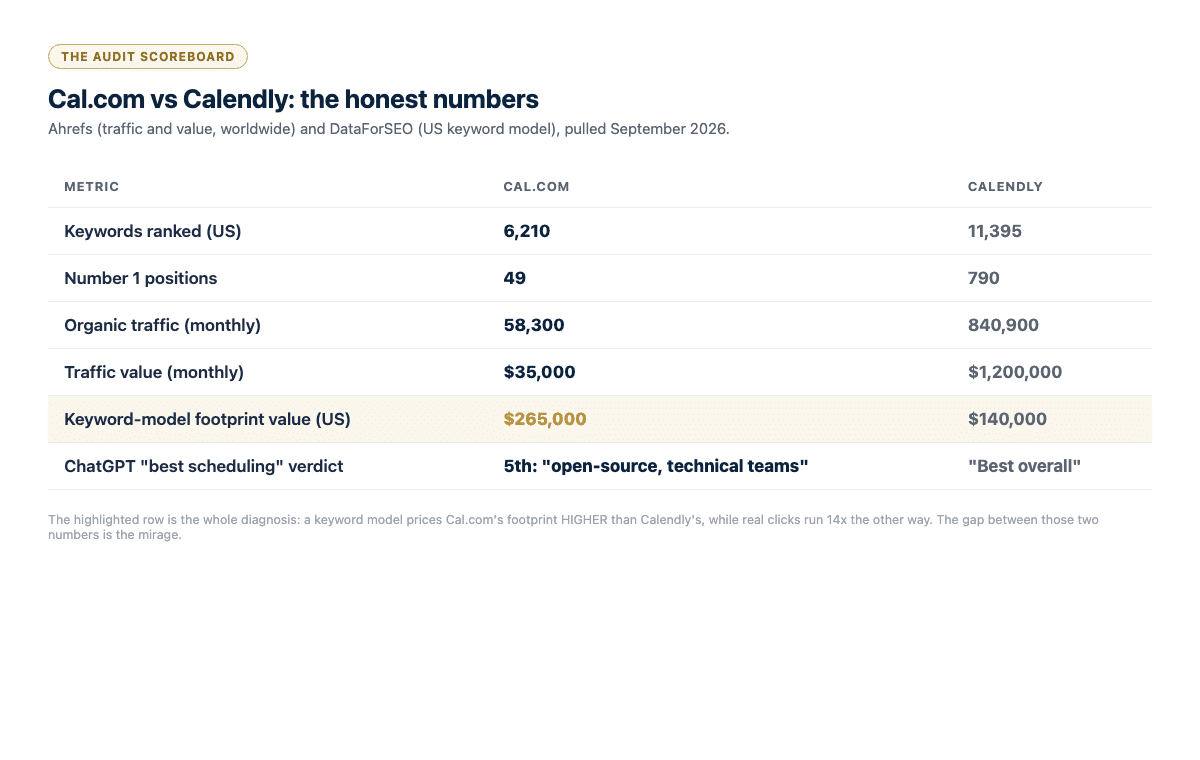
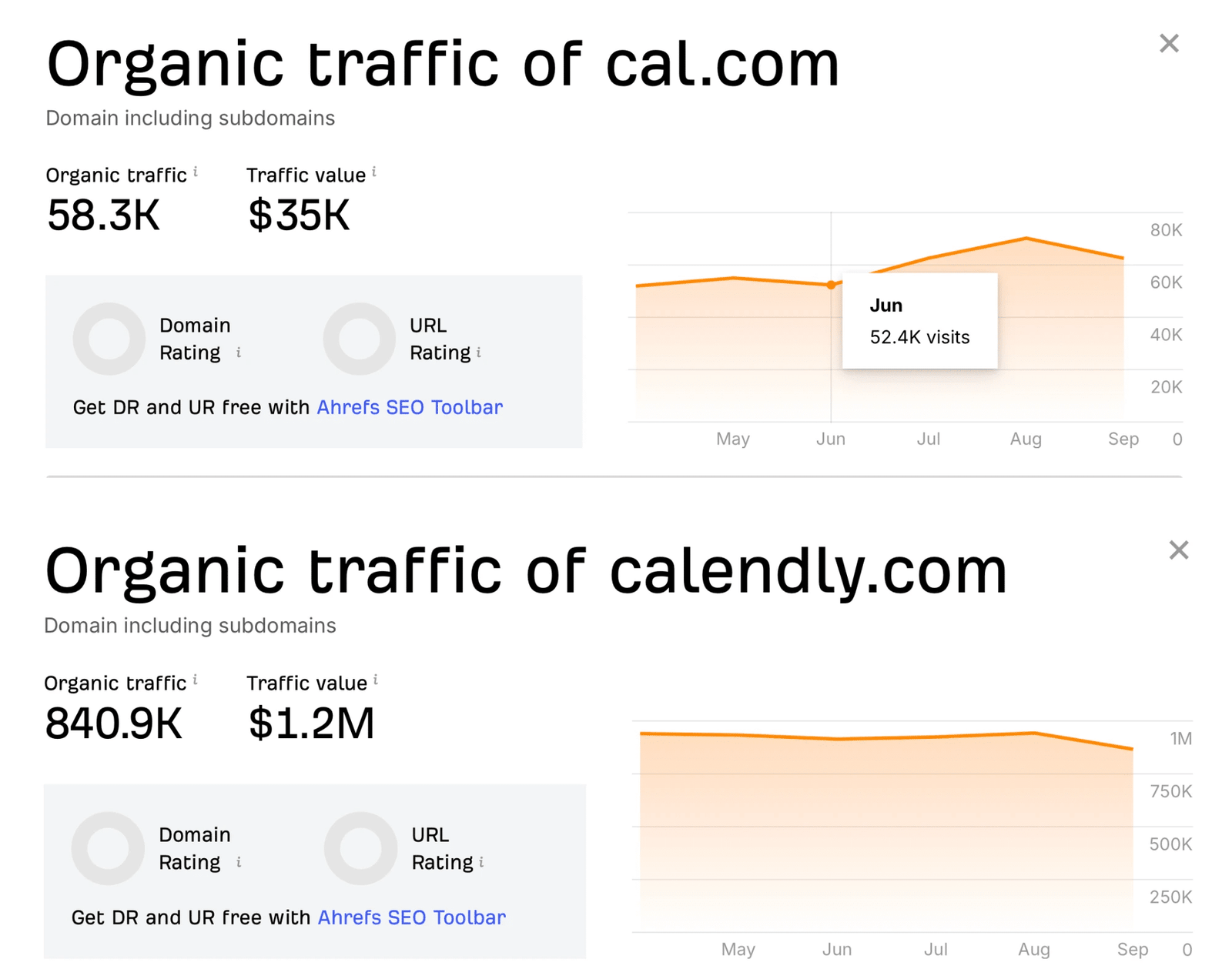
Hold on to the strange row: a US keyword model prices Cal.com’s footprint at $265K a month, nearly double Calendly’s, while actual clicks run 14 to 1 the other way. Both tools are measuring the same site. When two credible measurements disagree that hard, the disagreement is the finding, and it means one thing: the rankings exist, but they are not made of buyers.
Step 1: check what the traffic is actually made of
Cal.com ranks 7th for gcal, a query with 3.35 million monthly searches from people looking for Google Calendar. It ranks for google meeting. And then it gets stranger: the domain ranks 24th for english in chinese, because of this page.
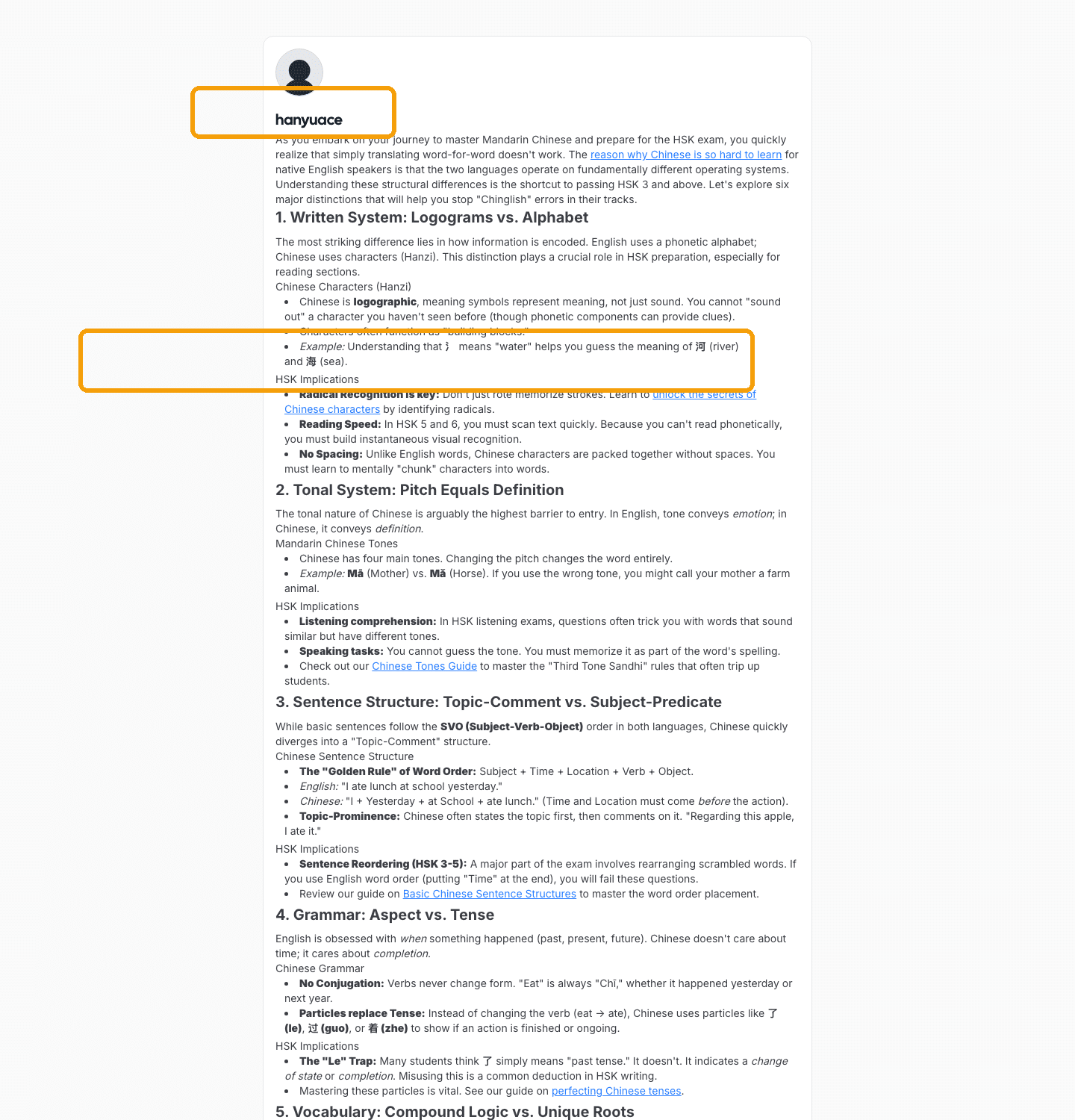
That is parasite SEO, running on their own domain, and it is a spam-update liability sitting on everything else they have built. The governance fix costs nothing: user-generated pages noindexed by default, indexable only after review. The audit lesson for your own site: pull your ranked keywords, sort by volume, and ask of every big row, is this my buyer? Navigational strays, UGC leakage and rogue pages inflate every dashboard number while producing nothing, and they hide real progress underneath.
Step 2: dissect the single most valuable SERP
For Cal.com that search is calendly alternatives: someone already using the market leader, frustrated, budget in hand. Here is the page one that greets them.
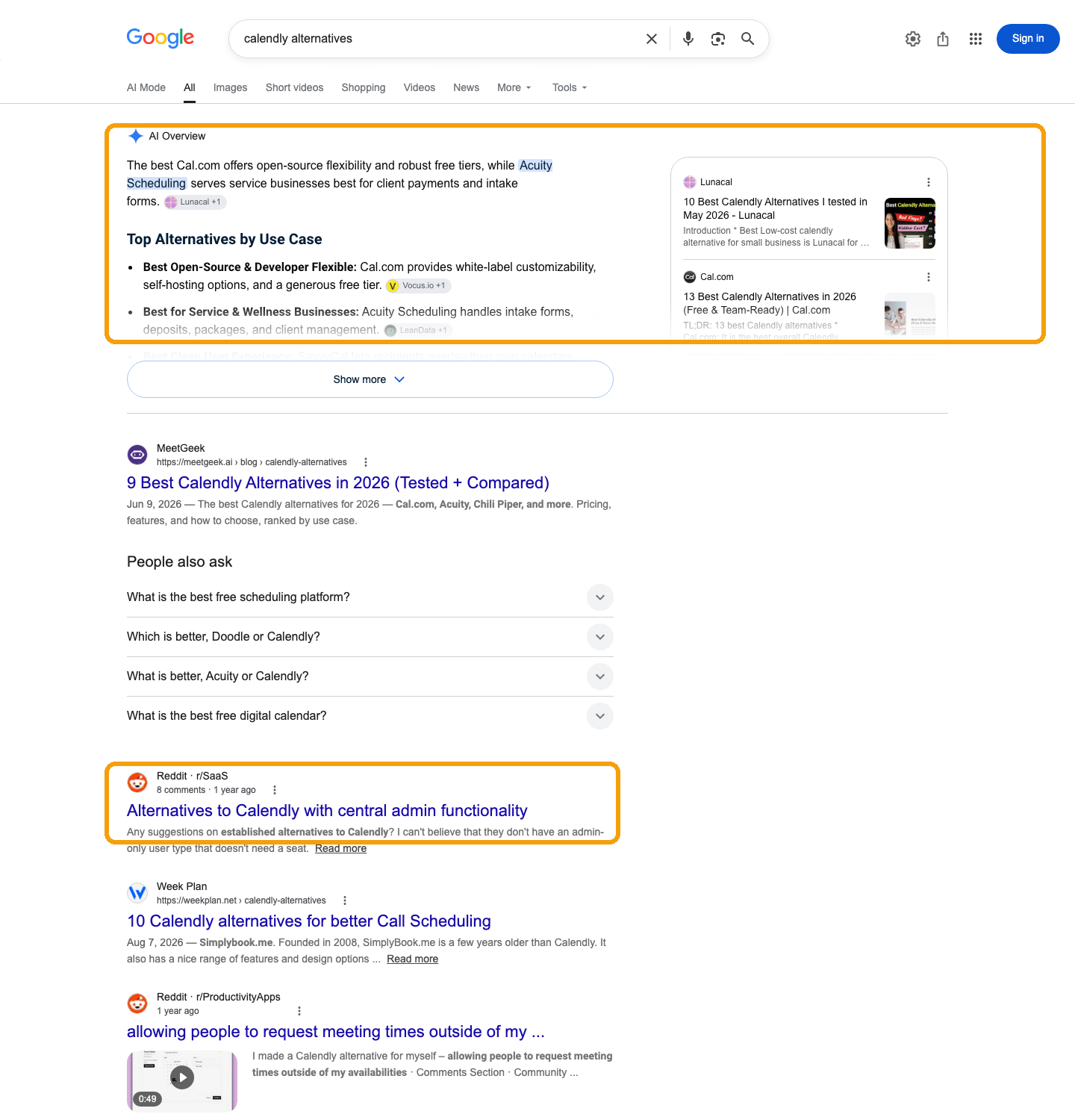
Three lessons live on this one screenshot. First, Cal.com is in the AI Overview only because other people’s content carries them; that is the citation layer doing them a favour their own pages have not earned, and it is the argument for brand mentions and authority in one image. Second, the pages that win are honest, first-person, tested-and-compared listicles from tiny competitors; Cal.com’s own “13 best alternatives, we are number 1” page is organically invisible, which is what happens to self-promotional listicles now. Third, that Reddit thread is not a threat, it is a content brief: a real buyer writing your next comparison page’s angle for free. We covered why those threads keep outranking vendors in our Reddit citations research.
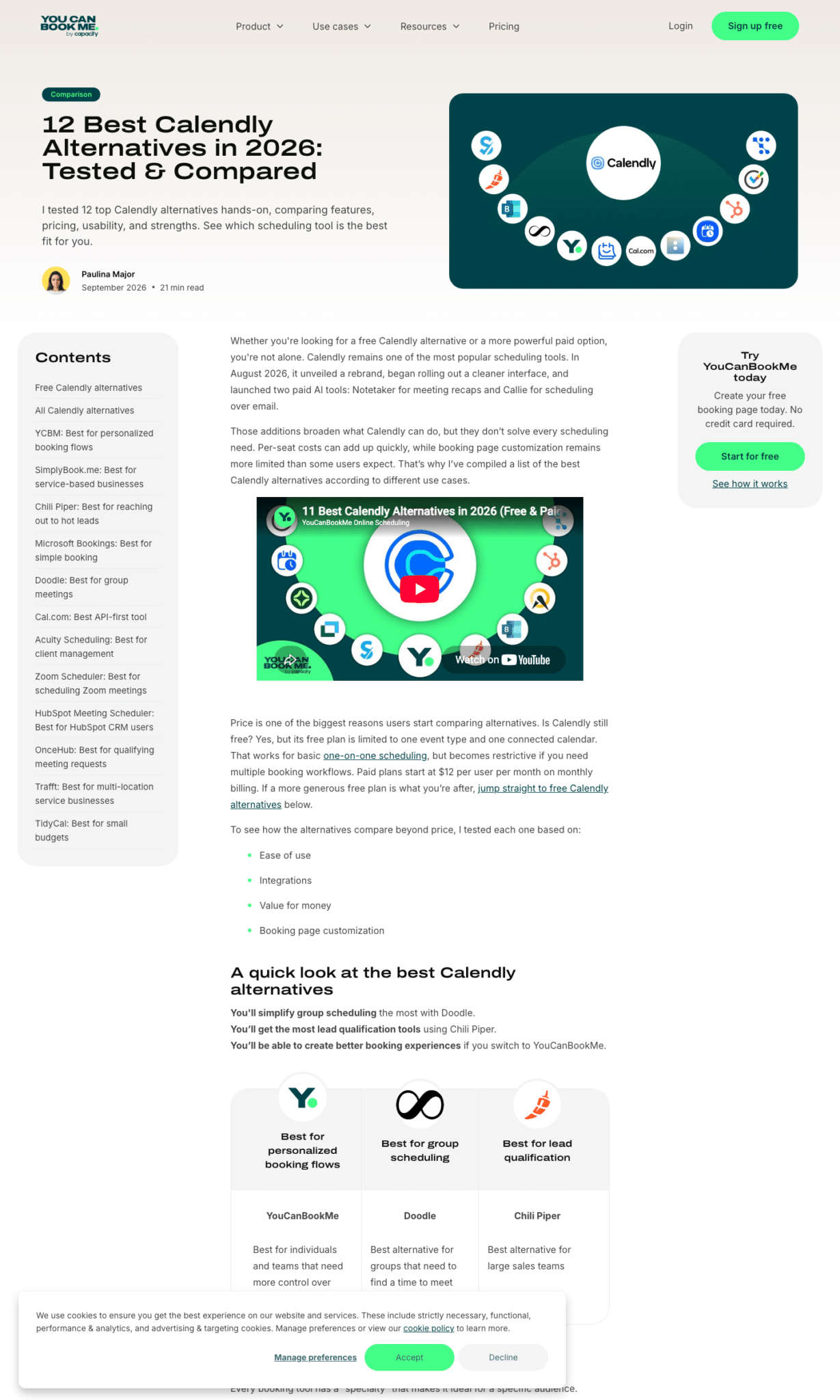
The rebuild recipe for a listicle that deserves to rank: name your actual pick in the first paragraph, put a real comparison table mid-page because that is the element AI models lift, include competitors honestly, date it, and write it first person. A smaller rival shows what the finished article of the format looks like:
Step 3: test the AI shelf, stage by stage
We test every stage of the buying journey in the answer engines, because different question types produce completely different results. For Cal.com the map came back split.
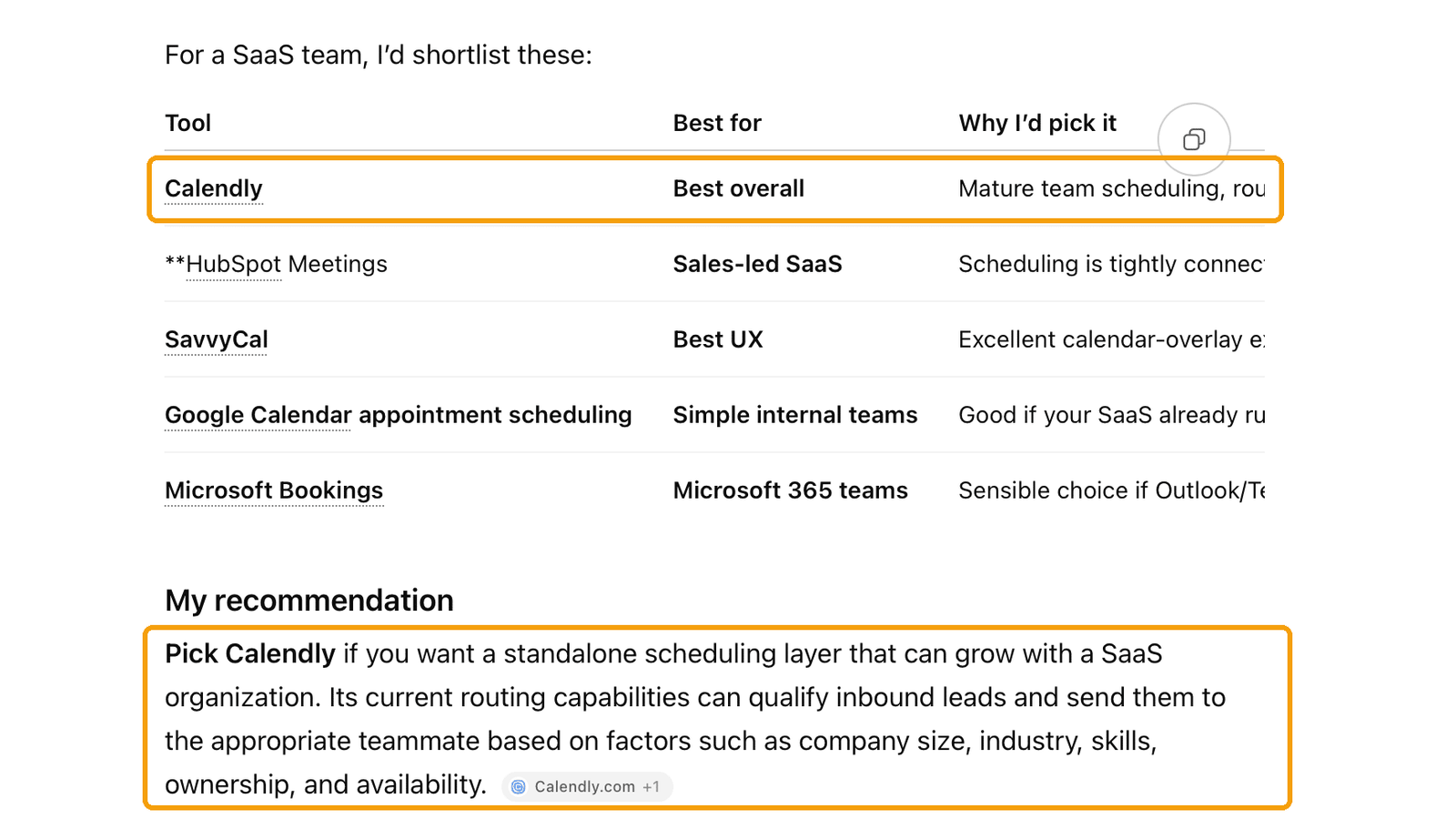
On the category question, Cal.com ranges between fifth and invisible. On alternatives questions they flip to being the default pick, and on the head-to-head against Calendly they win outright, partly through their own comparison content. That split is the consensus trap in action: years of listicles, directories and Reddit threads have taught the models that Cal.com means “open-source scheduling for developers”. The label is accurate, differentiated, and a ceiling, because when an ordinary SaaS team asks for scheduling software, the model reaches for the mainstream shelf and Cal.com is not on it. We wrote up the mechanism behind this in our query fan-out breakdown.
And the community layer can go further than labelling you; it can become your official summary:
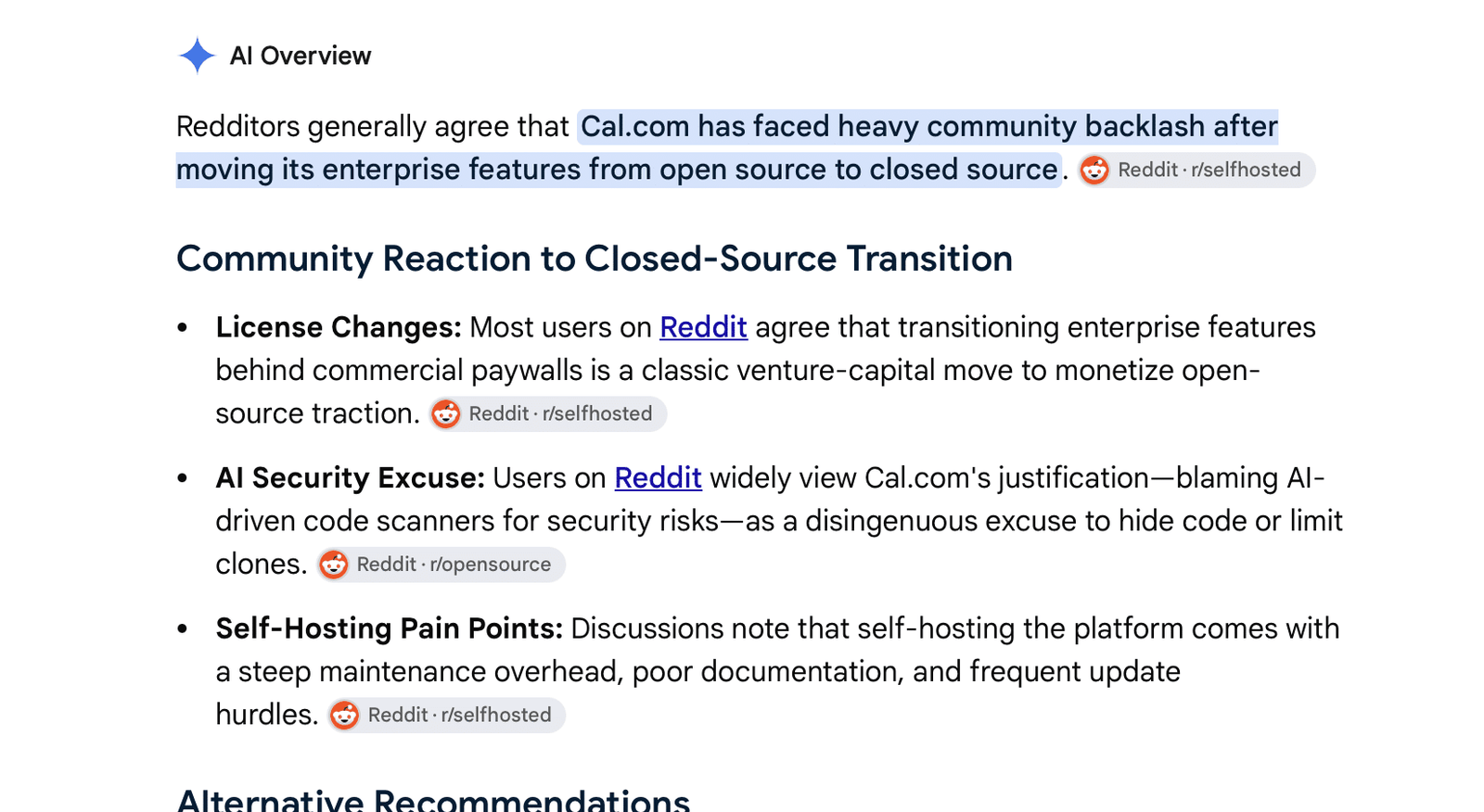
You cannot delete that. You can answer it where it lives: a disclosed official response in the exact threads, a pinned AMA explaining what changed and what stays open, so the next crawl of the consensus has your side in it. Silence is a strategy too, just a losing one.
Step 4: find the striking-distance money
Under the mirage sits the real opportunity: 493 commercial keywords ranked between positions 5 and 25. This is the fastest traffic available to any site, because Google already half-trusts the pages. A sample of what is parked there:
| Keyword | Volume/mo | Position | The fix |
|---|---|---|---|
| calendar scheduler | 3,600 | 7 | Homepage push: page-level links |
| scheduler application | 9,900 | 18 | Rebuild the listicle + aimed links |
| scheduling tool | 1,900 | 10 | Same homepage push |
| calendly free plan | 1,300 | 18 | Refresh the pricing teardown + authority |
| you can book me | 2,400 | 11 | One push from page 1 on a rival brand |
| scheduling agents | 1,300 | 8 | The opportunity: see step 6 |
Across 138 companies we audited this year, 97% had more rankings parked on pages 2-3 than on page 1, and the cheapest growth in almost every plan was working that backlog rather than publishing more. Cal.com, with 712 posts and positions 7-18 on its money terms, is the pattern at its purest. The audit rule: aim every new link at one of the fifteen pages with a job, not at the blog in general.
Step 5: the accidental wins tell you the strategy
The best-performing content on the whole domain was never part of a content calendar: the integration and app directory pages. The Google Calendar app page is one of their biggest, and the Granola integration page holds 33 top-10 keywords. Meanwhile creators with 27K-32K subscribers publish full tutorials and comparison videos recommending Cal.com, partly because the affiliate terms make it worth their while, and one of those creators’ websites is a source Google’s AI Overviews regularly quote. One affiliate relationship produced YouTube reviews, blog comparisons and an AI-cited website. When something ranks by accident, that is the market telling you where your authority is natural; the move is to build it on purpose.
Step 6: find the unclaimed shelf

The search demand tells the story their marketing has not caught up with: ai receptionist is over 12,000 searches a month and up 2,400%. AI phone agent is up 650% with a $60 cost per click. Difficulty on the cluster is still low, and Cal.com already ranks 8th for scheduling agents with a product page. Nobody owns this category’s answers yet. The consensus corpus for AI scheduling is being written this year, and whoever’s name saturates it becomes the default the next model generation reaches for. That window is the single most valuable finding in the audit, and it closes on its own schedule, not theirs.
The 90-day fix, in priority order
Every audit should end in a sequenced plan, not a findings dump. Cal.com’s, in one list: fix the scoreboard first, measure the 493 commercial keywords instead of the mirage. Govern the UGC pages, noindex by default. Rebuild the comparison cluster as fair page-level assets, because their own SERP proves the self-first listicle is dead. Concentrate links and updates on the striking-distance pages. Claim the AI scheduling shelf with a consistent category noun in every new mention. And work the third-party layer, the listicles the AI Overview already cites, review velocity, a managed presence in the Reddit threads that rank. None of it needs more content volume; it needs authority pointed at about fifteen pages and one new category claimed before anyone else notices it is open.
How to run this SEO audit on your own site
The six steps, stripped of the Cal.com specifics: pull your ranked keywords and sort by what your buyer would actually type, not by volume. Identify your one most valuable SERP and study who wins it and in what format. Ask the answer engines your category question, your alternatives question and your brand question, and note which shelf you are on. List every commercial keyword at positions 5-25 and aim your next quarter of links only there. Read what communities and reviews say about you, because the engines already do. And look for the emerging query cluster in your category that nobody owns yet, because that is where this year’s effort buys next year’s defaults. If you want the deeper framework, our SaaS SEO strategy guide covers the full system, and our GEO vs SEO breakdown explains why the AI-answer checks now matter as much as the rankings.
Frequently asked questions
What should a real SEO audit example include?
Traffic composition analysis, a teardown of the highest-intent SERP, AI answer testing across the buying journey, a striking-distance keyword list, community and review sentiment, and a sequenced fix plan. A crawl report alone is a health check, not an audit; the audit is the diagnosis plus the order of operations.
What tools were used in this audit?
Ahrefs for traffic and value, DataForSEO for US rankings and keyword data, live Google captures for the SERPs and AI Overviews, and live ChatGPT tests for the answer-engine layer. All data was pulled in September 2026, and every screenshot in this post is from the real audit.
How long does an SEO audit like this take?
This one took several days of pulls, page reviews and live testing before a word was recorded. A useful audit is measured in findings that change behaviour, not page count: six moves Cal.com could start this week beat a 90-page PDF nobody reads.
Why audit a company that did not ask for it?
Because a worked example on a real, well-run company teaches more than a hypothetical. We chose a business we respect, framed everything as how they would win, and flagged the security-adjacent finding to their founder directly before publishing.
Want this run on your site?
This is the exact process behind our free AI visibility audit: your traffic composition, your money SERP, your AI shelf position, and the shortest path to pipeline, on a call led personally by me.