Content
Pages that answer the buying question.
Buyers are already asking ChatGPT, Claude, Gemini, AI Overviews, and similar systems which products to trust. EMGI maps your ICPs, buyer prompts, target pages, authority gaps, and category context, then builds the proof those systems use when they generate answers, comparisons, and shortlists.

Matt leads the strategy personally, connecting AI citations, search demand, content updates, and authority signals into one measurable roadmap.
Authority has to work across four surfaces.
Pages that answer the buying question.
Editorial proof from relevant sources.
Conversations buyers already trust.
A place on the deciding shortlist.
The outcome is visibility, not another dashboard.
From $3,000/month
The editorial engine, pointed at your money pages. Relevant publications, a Priority Page Map and placement reporting.
$300 to $500 per link. The mix follows your category and the quality of the opportunities.
View the engine →From $4,000/month
Diagnosis first. Then content, authority and AI visibility, measured against the baseline we capture with you.
Start with the map →Customer and market diagnosis. An Authority Roadmap. A panel of 30 buyer prompts and a share-of-voice ledger.
Editorial placements, publisher vetting, the Priority Page Map and movement reporting.
For illustration: at $12,000 gross profit per new customer, four incremental customers cover that annual starting investment. We run this with your actual margins and close rates.
Ask ChatGPT which tools it recommends in your category. Does it name you? That is a useful place to start the conversation.
Talk through your categoryThe final scope follows the roadmap. If we cannot see a credible way to move the needle, we will say so on the call.
A short walkthrough from Matt on how EMGI finds the prompts, pages, sources, and proof gaps shaping whether SaaS brands get cited and recommended.
noun / also GEO, AEO, AI visibility
LLM SEO is the work of making your brand visible in the answers large language models give: being named when ChatGPT recommends tools in your category, cited by Google's AI Overviews, and retrieved when AI searches the live web. It is built on the same foundation as classic SEO, editorial authority and brand mentions, because the machines learn who to trust from the same sources people do. In our 137-company research, AI Overview and ChatGPT citations correlate at 0.91: one authority pool, read by every machine.
The test is simple, and we invite you to apply it to us: ask for the baseline and the re-run method. Real AI visibility work starts by capturing where you appear today across a fixed panel of your buyers' actual prompts, then re-runs the same panel on schedule so movement is visible and attributable. No baseline, no method, no accountability. That test is also why we publish our research openly: five studies with open methodology on how AI engines actually pick sources. We measure this field for a living; the programme is the same measurement pointed at your brand.
The work connects buyer prompts, category pages, comparison assets, editorial authority, community citations and content updates into one system. If you want the editorial engine underneath it, start with our SaaS link building programme. If you want the informational guide, the blog covers that separately.
Four connected zones turn customer intelligence into measurable presence across search and AI answers.
Built around your buying journey, not a generic keyword list.
Measure feeds the next map. The pages, placements and sources we build become the evidence for the next cycle.
1,000 to 17,000
Prospeo monthly organic visits, crossing $1.5m ARR during the engagement.
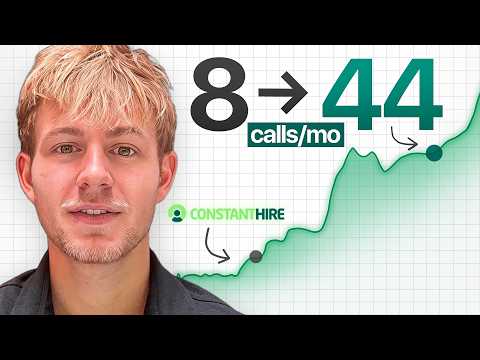
8 to 44
ConstantHire inbound sales calls a month, reached in eight months.
11 days
From publishing to an AI citation. AI traffic then moved from 49 to 185 sessions.
A regulated market where visibility needed to be credible, not noisy.
Web scraping SaaS GEO campaign case study.A category where AI answer ownership depends on authority across many corroborating sources.
Research library Five published studies on how AI picks sources.Open methodology, built from the same measurement system we point at customers.
Original research on where SaaS brands lose visibility between Google rankings and AI recommendations.
02 Reddit citations in AI searchHow community discussions can become part of the recommendation layer buyers see inside AI tools.
03 Directory listings and AI citationsWhy third-party list presence still matters when AI systems compare products in a category.
04 LLMs.txt studyHow emerging AI access files may help shape how systems discover and process website content.
05 Query fan-outs in AI searchHow one buyer question can expand into many hidden sub-queries before an AI answer is produced.
We agree a fixed panel of 30 buyer prompts during diagnosis. These examples show the questions, not client results.
For each re-run: record the engine, date, brand mentions, cited sources and shortlist position. Compare the same questions over time.
AI systems do not only read your website. They build confidence from patterns across pages, citations, lists, discussions, comparisons, and trusted third-party sources. The work is to map the buyer, understand the prompt journey, and make those authority patterns stronger and easier to corroborate.
We look at the buyer, the prompts they might use, which competitors are appearing, which sources are being cited, and which pages or third-party surfaces seem to shape the answer.
That can include editorial mentions, relevant backlinks, directories, Reddit, Quora, community signals, comparison content, product-led pages, internal links, and clearer entity consistency across the web.
The aim is not to be visible for novelty. The aim is to support the buying journey, strengthen evaluation, and make your brand easier to choose when prospects compare options.
Consensus and authority, not keywords alone. Our 137-company study found brand authority predicts AI citations far better than raw traffic, and 44% of top-ranked brands were still invisible to ChatGPT. The engines quote whoever the web consistently treats as the reference source for a topic.
No, and nobody honest can. What we can do is show you which citations your category has already given away, which are winnable, and then show receipts as they land: screenshots of answers, citations, rankings, and share-of-voice movement.
Three ways: citation tracking across the queries that matter in your category, share of voice against competitors over time, and live checks of the prompts your buyers actually ask. We also recommend adding "How did you hear about us?" to signup flows where possible.
It is one authority engine with two dashboards. The same authority that helps money pages rank is what gets brands quoted in AI answers. What changes is how we choose targets, build corroborating proof, and measure visibility.
They matter, but only where the evidence points. We treat Reddit, Quora, communities, directories and review platforms as part of the visibility picture. No fake accounts, no astroturfing, no committed thread counts. We look at where your category answers are sourced from and go there.
If you are pre-revenue, need leads this month, or sell outside B2B SaaS without a research-heavy buying journey, this probably is not the right spend. Authority building pays compound interest, and it needs real traction and a 6-12 month horizon to be worth your money.
No black box. Follow the evidence with us.